
Challenge
Information sourcing and research is a common problem for many companies out there.
Obtaining useful information about market opportunities from huge amounts of data requires vast resources, both in terms of time and funds. The good news is there is the AI-based technology that is able to perform some parts automatically, and therefore improve the efficiency of the whole process.
A system using AI algorithms (Document Classification, Named Entity Recognition, to name a few) can spot certain changes in the market without any human intervention.
Solution: Detecting Company Management Structure Changes
Let’s focus on a particular, real-life example. An investor needed information about changes in the management structure of companies on the NYSE. Before leveraging the AI solution, he employed a dedicated team of research analysts traversing thousands of web articles, tweets and social media posts looking for recent changes in the structure of the companies.
1. Collect the data from the online and local sources

The first step we need to do is to aggregate data from the valuable sources. So far, our client’s analysts read online business newspapers and monitored selected Twitter accounts looking for structural change information.
Our system has entirely automated that work by scraping newspapers and tweets, producing a steady feed of information ready to use by the analysts, putting the information in one place.
2. Filter out the irrelevant materials
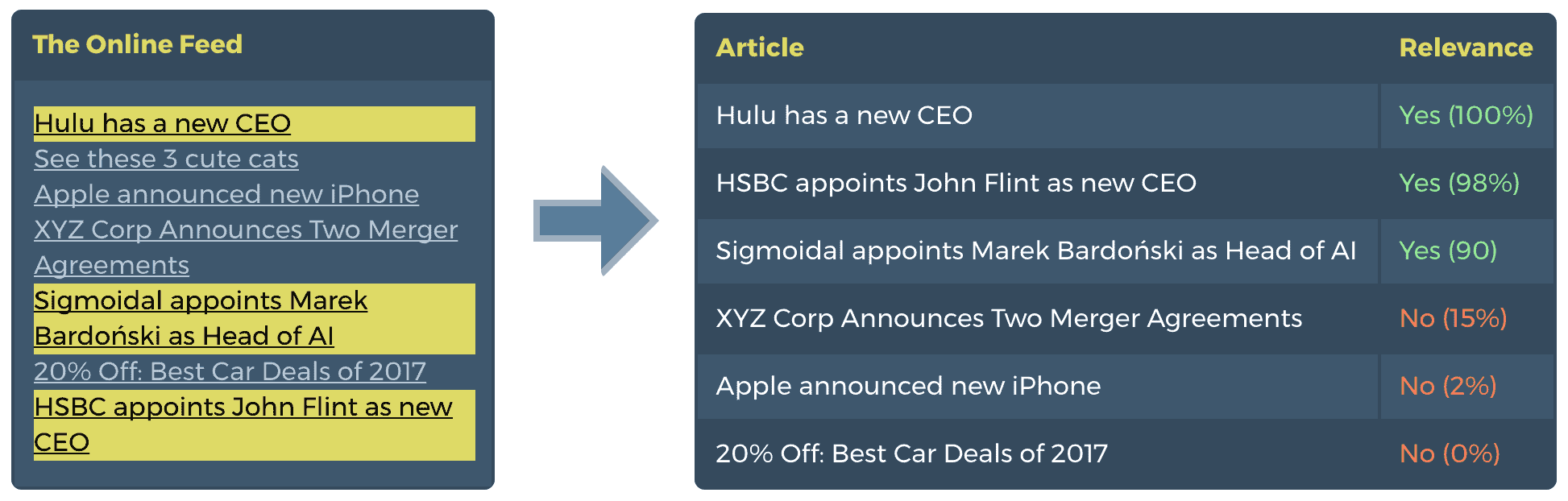
As the next stage in the pipeline, our state-of-the-art AI text classification algorithms precisely filter out all the irrelevant materials, basing their judgment on the context and actual meaning of the text.
3. Extract knowledge from text
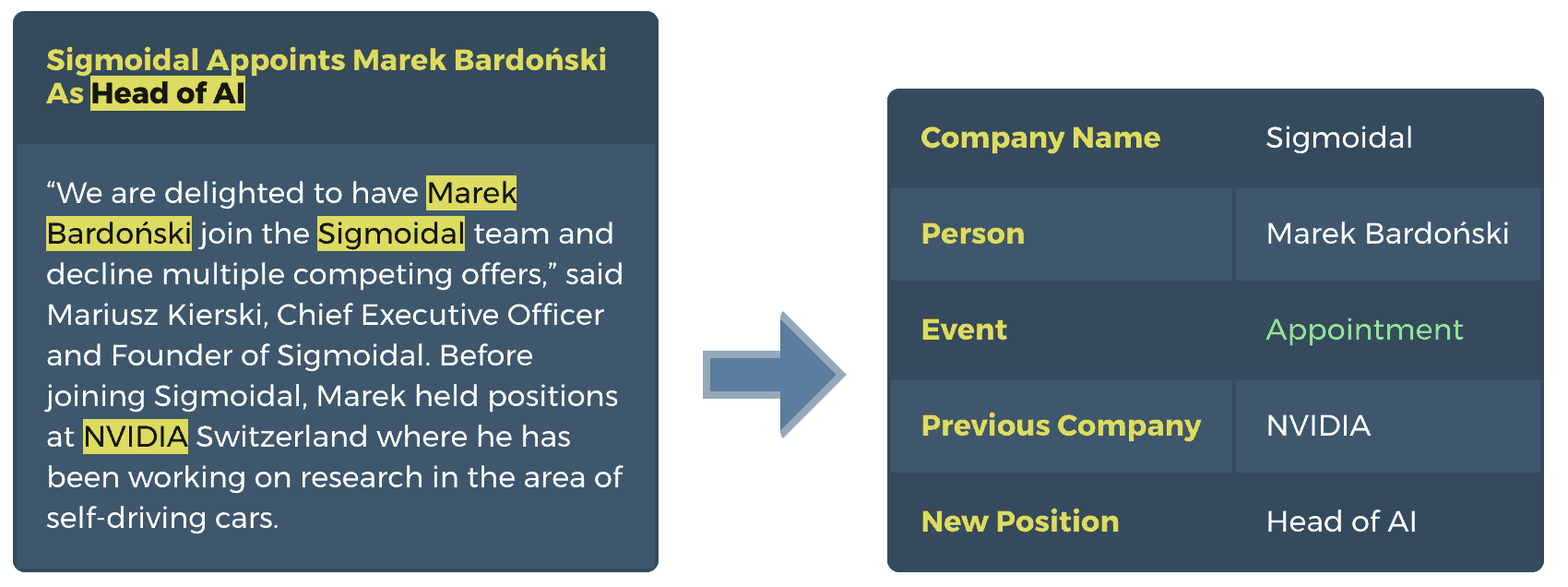
We’ve already managed to save a lot of time by showing only the most valuable information.
However, there’s still a lot of work to do. Working on raw documents is quite difficult. We need to extract the information that the client needs.
And AI can help us in that as well!
Data scientists call this technique named entity extraction. It identifies important information to the investor in the text, based on given criteria. In this case, we extract the company name, position, and the reason, and put it in a table row that we can use later.
At this point, it can be exported into JSON or CSV.
4. Generate insights and find correlations in the data
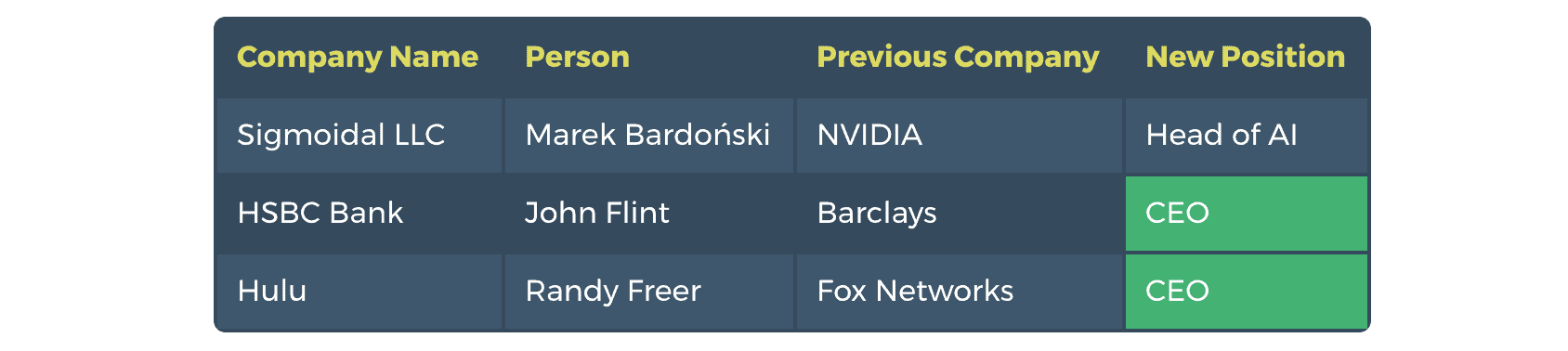
You probably know that the computer is great at processing tabular data, like Excel tables or databases. We call this type of information structured data.
The AI now further processes this data by:
- prioritizing the most important structural change instances
- filtering out based on certain criteria (e.g. companies outside a geographical region)
- finding patterns and correlations in data
- using the collected information to predict other changes in the market and stock movements (generate insights)
5. Generate a human-sounding, readable report
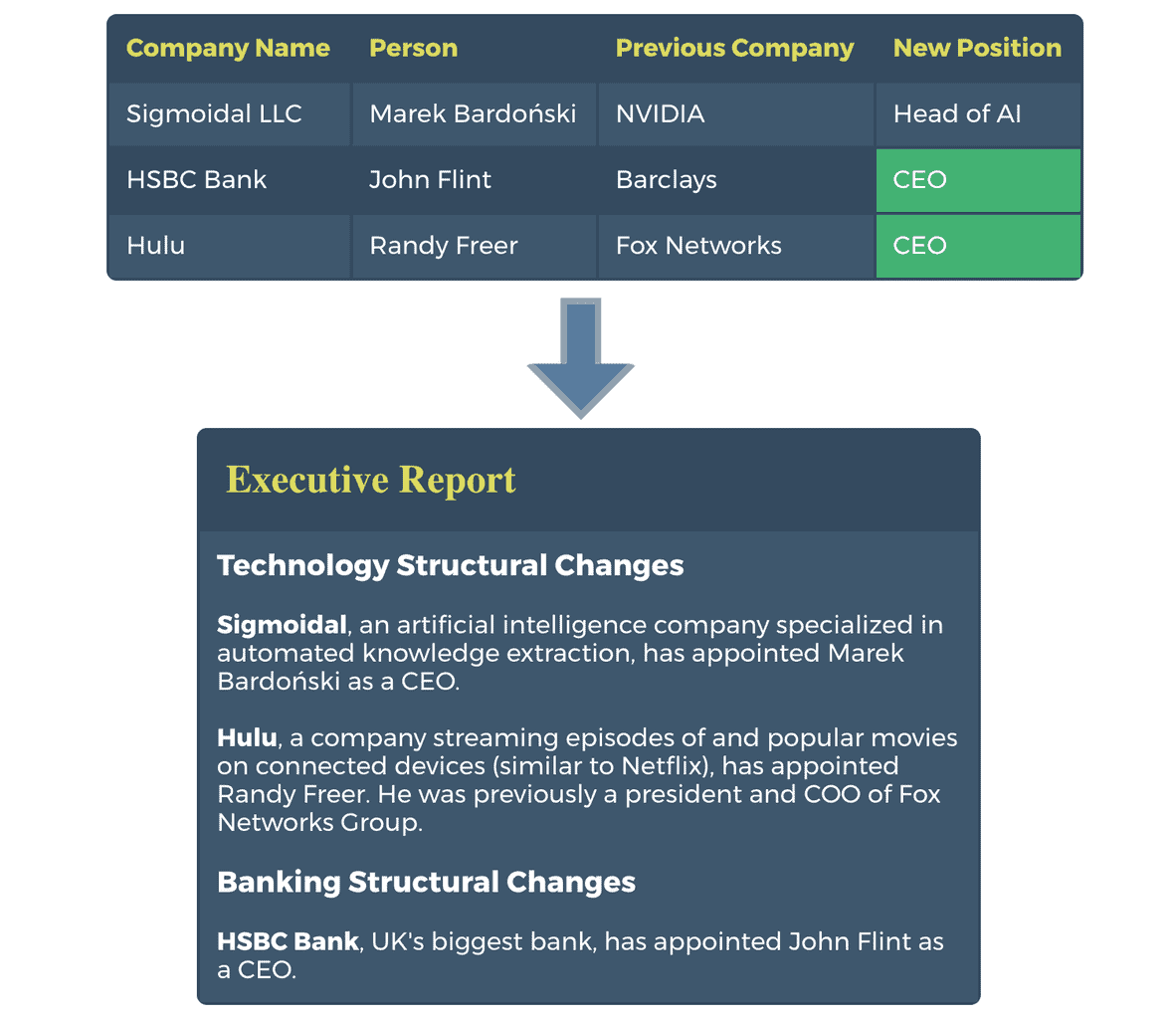
Our investor needs human-like, readable reports that he/she can easily relate to and quickly find important information.
Thanks to another technology called the Natural Language Generation (NLG), the artificial intelligence can generate human-sounding reports and summaries.
And we’re going to leverage this new machine skill to help our investor.
Our last step is to turn the raw table into an executive summary that the client can use to guide their further decisions.
Integrating all that goodness into the corporate workflow
We’ve made the NLP technology very accessible.
Depending on your needs, you can either:
- plug it into your infrastructure using our microservice-based API
- use it as a standalone cloud-based application, importing and exporting the data in popular formats, like Excel, CSV, or Word.